The Ownership — Field Guide
What it actually costs to open an animal hospital.
Every number on this page is sourced and dated, because you are going to check — and because most of the numbers in this genre don't survive checking. Where a figure couldn't be verified, it isn't here.
The short version: Provide, the veterinary lending company owned by Fifth Third Bank, publishes an all-in startup range of $250,000 to over $1,000,000 (2026). A worked 2026 budget for a 2,000-square-foot leased-space buildout, published in Today’s Veterinary Business by BDA Architecture, totals $803,500. Ground-up construction costs more: Terrapin CG (April 2026) puts hard costs at $275–$400 per square foot for a 2,500–4,000-square-foot hospital — $900,000 to $2.1 million before land, loose equipment, and design fees. Financing exists specifically for veterinarians, at 100% of project cost in some programs. The number that actually sinks first-time owners is none of these — it’s working capital.
The building
What does the buildout cost?
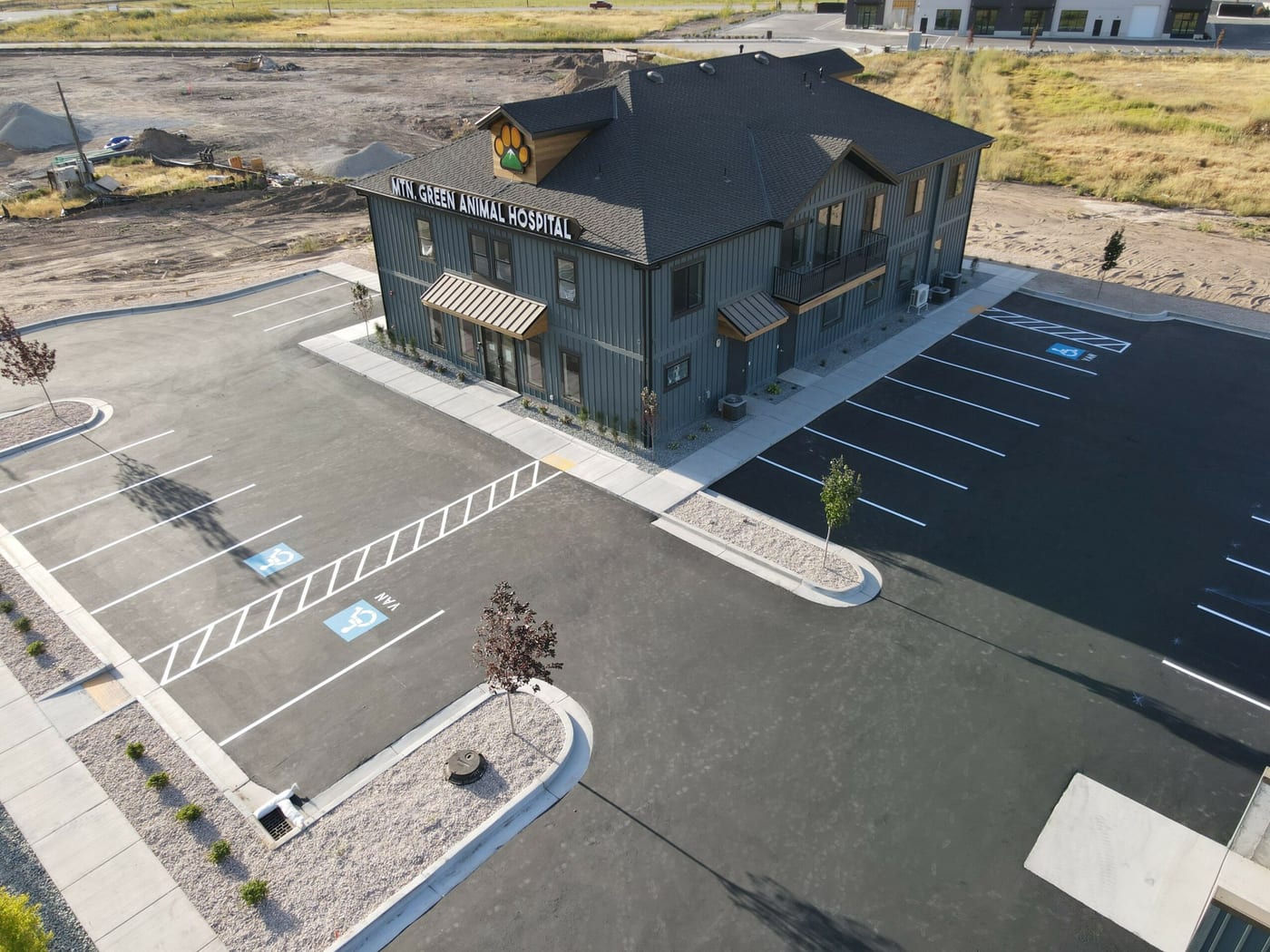
There are two ways to get a hospital: improve a leased space, or build from the ground up. Nicole has now done both — Mtn Green rose from bare ground in Morgan County; Agave is a from-scratch build in St. George — so the numbers below are the published benchmarks, checked against lived experience.
For a leased buildout, the cleanest public benchmark is the worked budget BDA Architecture published in Today’s Veterinary Business (February 2026) for a 2,000-square-foot project:
| Line item | Budget |
|---|---|
| Architecture & engineering | $67,200 |
| Construction | $512,000 |
| Business systems | $30,000 |
| Furniture & equipment | $75,000 |
| Financing costs | $37,500 |
| Legal & accounting | $5,000 |
| Contingency | $76,800 |
| Total | $803,500 |
For ground-up construction, Terrapin CG (April 2026) benchmarks hard costs at $275–$400 per square foot for a 2,500–4,000-square-foot general practice — $900,000–$2,100,000 total, excluding land, loose medical equipment, and design fees — with soft costs typically another 10–15% of hard costs and site work running $80,000–$200,000 on a typical suburban lot. Two forces are pushing these numbers as you read: Cushman & Wakefield (April 2026) estimates current tariffs add 6% to construction materials cost and 3% to total project cost versus a 2024 baseline.
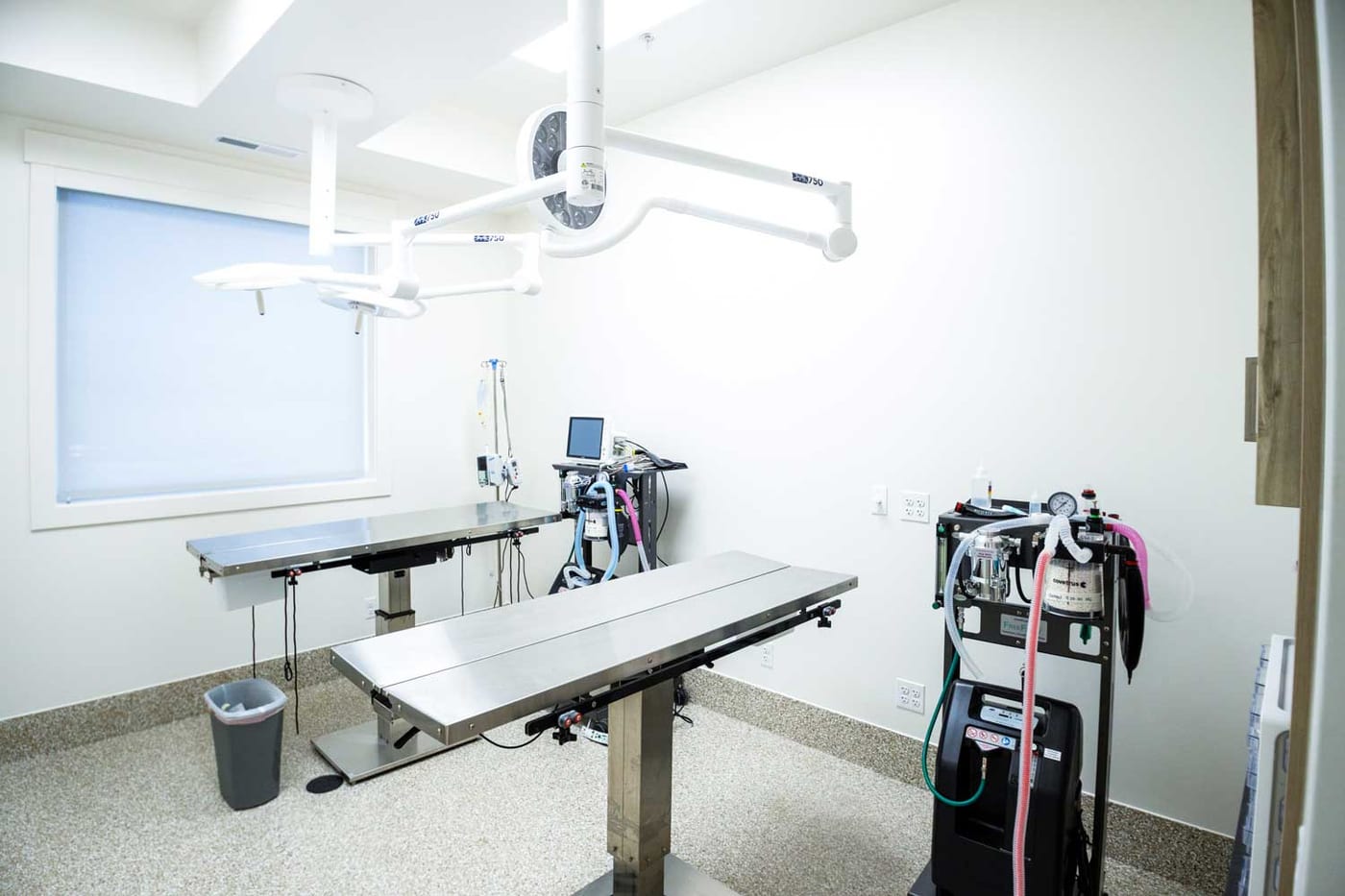
Why a veterinary buildout runs richer than ordinary retail space: LaunchAdvisor (2026) describes commonly advised specs of 10–15 air changes per hour in treatment areas against 4–6 in ordinary offices, 200–400-amp electrical service, and lead shielding for radiology. The plumbing, gas, and ventilation are the buildout; the walls are incidental.
The machines
What does the equipment cost?
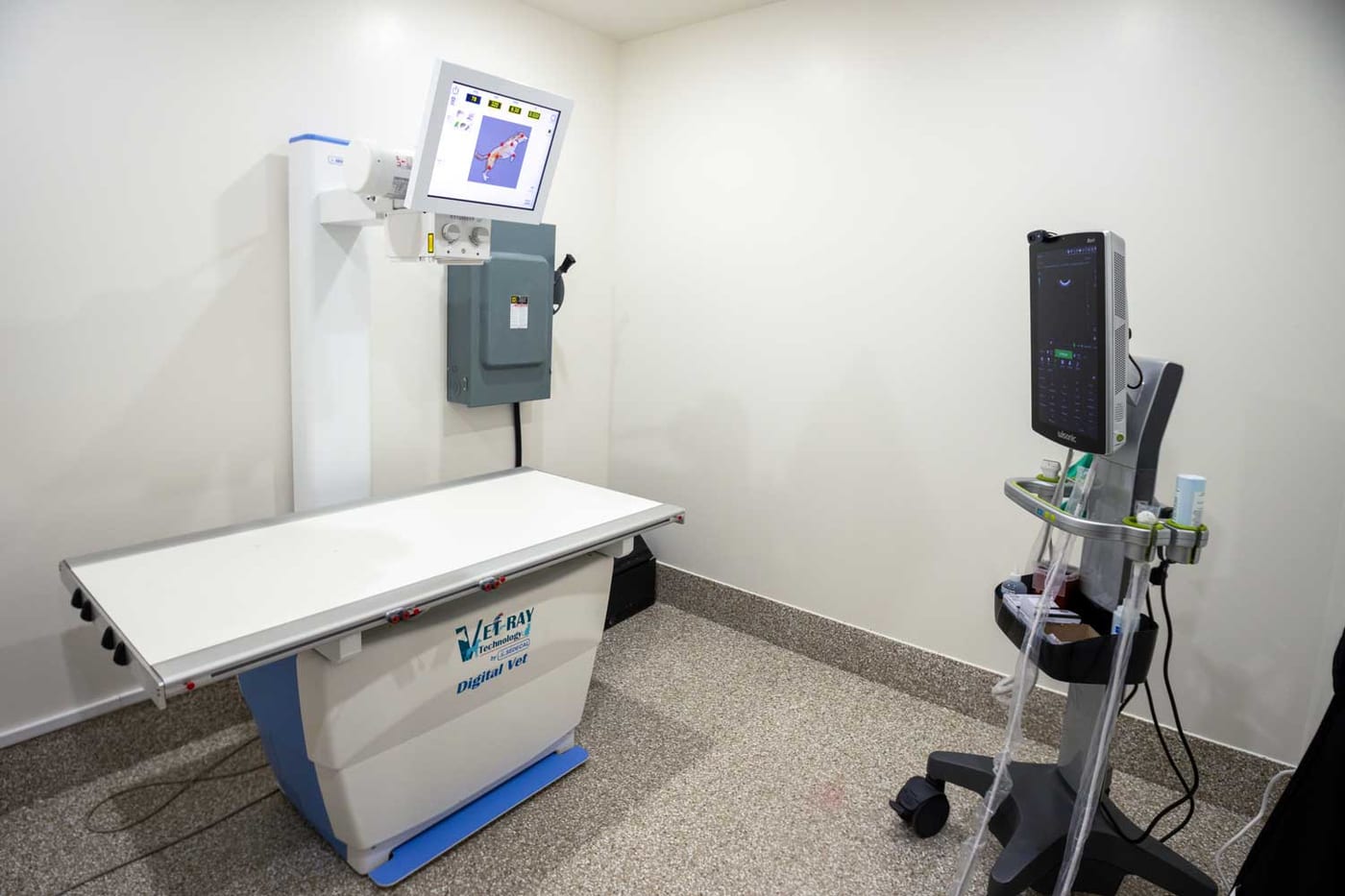
VetEqPT (April 2026) benchmarks a full equipment package for a one-to-two- doctor practice at $80,000–$180,000, and $200,000–$450,000 for three to five doctors. The trap is what the sticker leaves out: the same source puts installation and commissioning at 8–15% of equipment value and service contracts at 5–8% annually — and reports that clinics that ignore those factors commonly blow their equipment budgets by a quarter to a third.
This is one of the places a second set of experienced hands earns its keep. Every machine at both of Nicole’s hospitals was sourced, compared, and negotiated by the family that owns them — Britain Sorensen carries the build, the financing path, and the equipment decisions — and the vendor quotes a first-time solo buyer receives are not the quotes a repeat buyer receives.
The survival number
How much working capital do you need?
Rent, payroll, insurance, and the loan payment all run at full scale from the day you open. Revenue starts at zero. Working capital is the bridge across that gap, and it is the line first-time budgets cut when construction runs over — which is why it is the line that sinks practices. Provide advises three to six months of operating expenses in reserve (2026). Against that, iVET360’s 2026 benchmark report found practices in its sample holding an average of roughly 1.3 months of cash — closer to one month at smaller practices. The gap between advised and actual is the honest measure of how tight the first years run.
On revenue: anyone who hands you a universal appointments-per-day-to-break-even number is guessing — it depends on your fee schedule, your payroll, your rent, and your market. What can be said with a source: AVMA benchmarking found the most efficient hospitals ran about 2.7 credentialed technicians and assistants per veterinarian (with AVMA’s own caveat that no single ratio fits every practice), and staffing is typically the largest operating cost. Modeling this against a real local market is the first working session of the partnership — with real numbers, not genre numbers.
The money
Who lends to veterinarians — and on what terms?
Practice lending is a specialty desk, not a favor. Banks compete for veterinary startups because practices repay: U.S. Bank’s practice-financing program advertises up to 100% financing for startups and acquisitions, practice loans to 15 years, commercial real estate to 25 years, and up to six months of interest-only payments while you ramp. Provide underwrites veterinary startups as its core business. These lenders underwrite the practice’s projected cash flow — which is why student debt rarely disqualifies a veterinarian: AVMA puts class-of- 2025 educational debt at $212,499 on average among graduates who carried any, and lending happens at those debt loads every week.
On the SBA route: under SOP 50 10 8 (effective June 2025), a startup borrower must inject a minimum of one-tenth of total project cost as equity. And loan size changes price: per current SBA 7(a) maximums (August 2026, prime at 6.75%), loans above $250,000 carry a maximum spread of prime + 3.0, while loans of $50,001–$250,000 can run to prime + 6.0 — an undersized loan can cost more per dollar than a properly sized one. Rates move; verify the week you borrow.
None of this is financial advice — it is a map of published terms. Your numbers get built with your lender.
What the money buys
The shortcut that isn't cheating
The second build costs less than the first — because the mistakes are already paid for. Bring the third one to someone on her second.